Millwork
Shoe Mould / Quarter Round
Expert installation and craftsmanship, serving the GTA & Ottawa.
 Millwork
Millwork
Shoe mould and quarter round cover the expansion gap between flooring and baseboard, creating a clean finished line. We install them as part of every flooring job or as a standalone trim service, with colour-matched nails and caulk for a seamless result.
Shoe mould is measured and cut to fit each wall run, mitered at corners and coped at inside joints. It is nailed to the baseboard (not the floor), filled, caulked, and touched up.
Where it works & how it’s applied.
Where to Use
- 01All flooring installations with baseboards
- 02Floating floor perimeters
- 03Hardwood, LVP, and tile floor edges
Common Use Cases
- 01Post-flooring finishing
- 02Baseboard replacement projects
- 03Renovation completion details
- 04New home construction finishing
Frequently Asked Questions
When is shoe mould needed versus not needed?
Shoe mould is needed whenever there is an expansion gap between the flooring and the baseboard that needs to be covered - this is standard with any floating floor like LVP or laminate. Glued-down hardwood or tile that goes right to the baseboard may not need shoe mould. It's also useful when baseboard profiles leave a visible gap at the floor due to an uneven floor surface.
Is MDF or wood better for shoe mould in painted applications?
MDF is better for painted applications - it's perfectly uniform, takes paint well, and doesn't expand and contract seasonally the way wood does. Wood shoe mould is better only if your baseboards are stained wood and you need a matching stain. For anything that will be painted white or a colour, MDF is the practical choice.
Is shoe mould nailed to the floor or the baseboard?
Always to the baseboard - never the floor. Nailing to the floor would pin down a floating floor and prevent expansion, which leads to buckling. The shoe mould moves with the baseboard and wall while the floor floats freely underneath. This is a critical detail that some DIYers get wrong with damaging results.
How do you match shoe mould colour to existing trim?
In most cases the shoe mould gets painted the same colour as the baseboard, so exact colour matching is simple - just use the same paint. For stained wood applications, we source matching wood species and apply the same stain. If the existing trim has a custom stain, we test on a sample piece first before doing the full run.

Related Articles
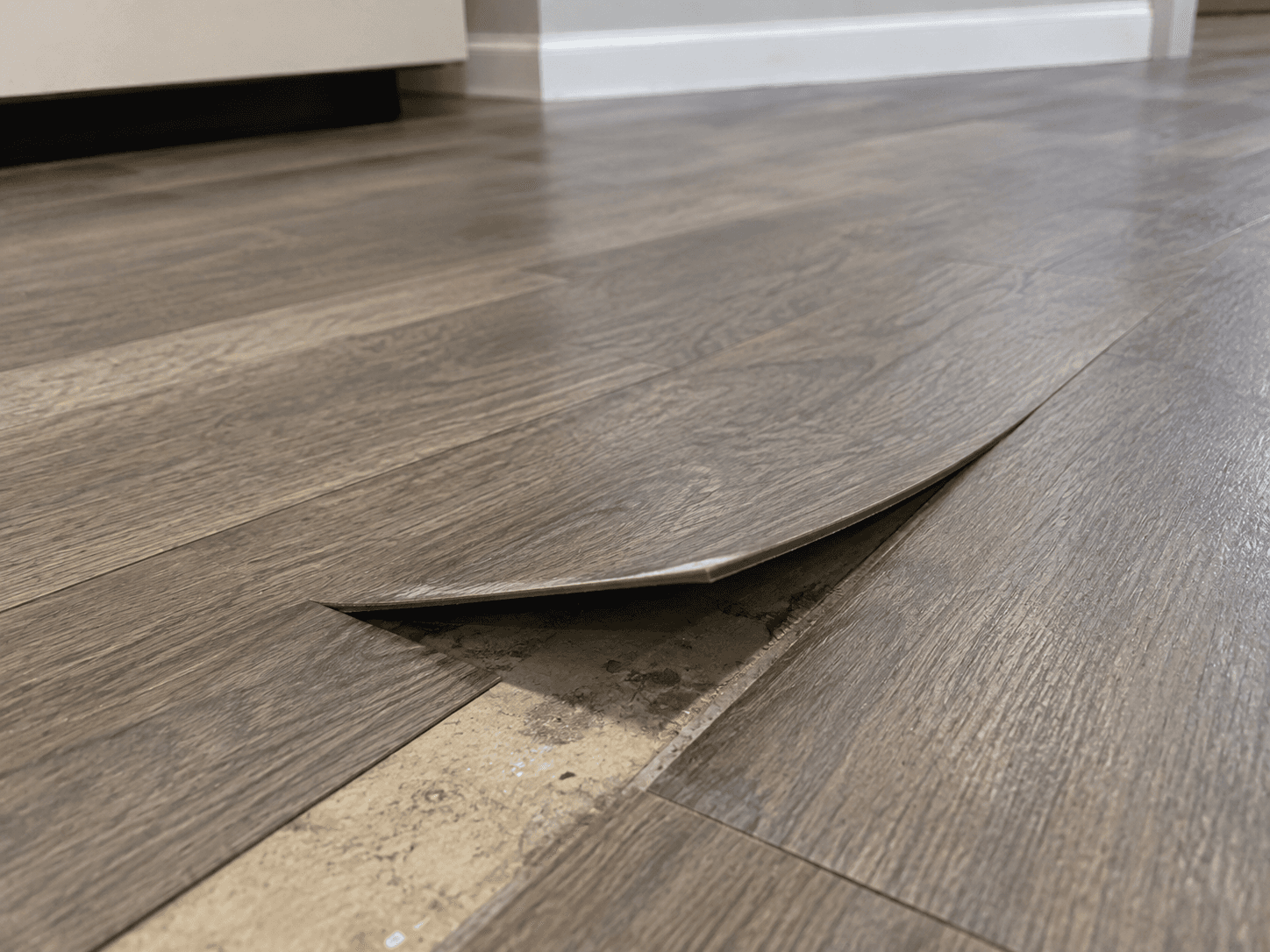
Why Is My Vinyl Flooring Lifting? Common Causes and Fixes
Learn why vinyl flooring lifts and how to fix it. Common causes include moisture, poor adhesive, and temperature changes. Professional solutions inside.
Read more →
Why Is My Hardwood Floor Squeaking? Causes and Solutions
Learn why hardwood floors squeak and discover practical solutions to fix the problem in your Toronto or Ottawa home.
Read more →
Door, Baseboard, and Doorstop Installation: A Complete Guide for GTA and Ottawa Homeowners
Learn how to properly install doors, baseboards, and doorstops in your GTA or Ottawa home with expert tips from FRPRO Contracting Services.
Read more →