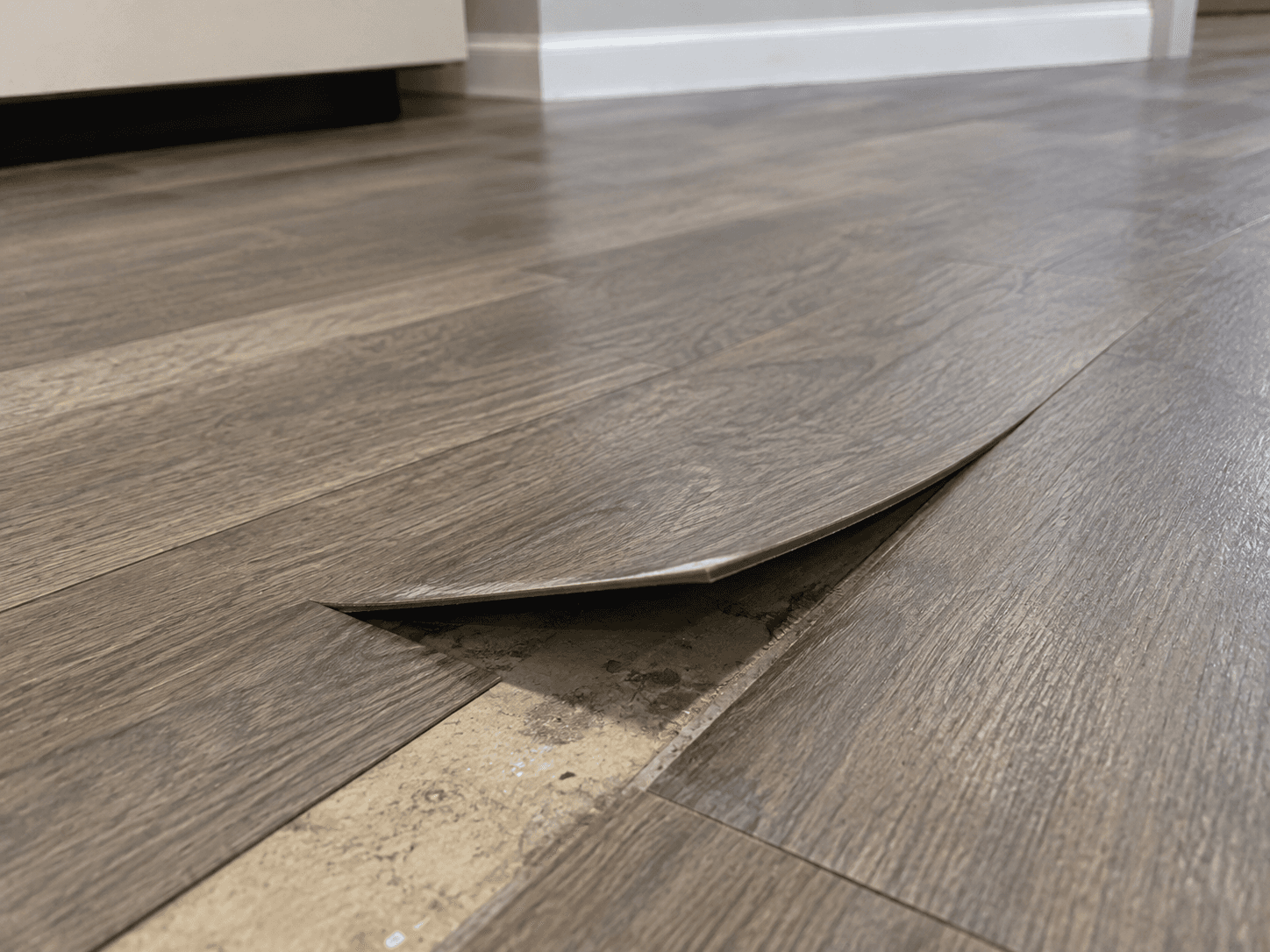
Vinyl flooring is one of the most popular and durable choices for homes across the GTA and Ottawa, but homeowners sometimes notice their vinyl beginning to lift at the edges or seams. If you're seeing bubbles, curling, or separation from the subfloor, you're not alone. Understanding what causes vinyl flooring to lift is the first step toward fixing the problem and preventing it from happening again.
Understanding Why Vinyl Flooring Lifts
Vinyl flooring lifts when it separates from the subfloor or when its edges curl upward. This happens for several reasons, but the most common culprit is moisture. Vinyl is a water-resistant material, but it's not waterproof, and excess moisture from spills, humidity, or water seeping from below can cause the adhesive to fail. When moisture gets trapped beneath the vinyl, it creates pressure that pushes the flooring away from the substrate. Temperature fluctuations also play a role, as vinyl expands and contracts with heat and cold, potentially loosening its grip on the subfloor over time.
Common Causes of Lifting Vinyl Flooring
Knowing what causes the problem helps you address the root issue, not just the symptom. Here are the most frequent reasons vinyl flooring lifts in homes throughout Toronto, the GTA, and Ottawa:
Moisture and humidity from bathrooms, kitchens, or basements seeping beneath the flooring
Poor or expired adhesive during original installation that has lost its bonding strength
Subfloor damage, warping, or unevenness that prevents proper contact between vinyl and base
Temperature swings that cause expansion and contraction, weakening the adhesive bond
Heavy furniture or foot traffic concentrating stress on particular seams or edges
Improper installation technique or failure to allow acclimation time before laying vinyl
Quick Fixes for Lifted Vinyl Flooring
If you catch lifting early, you may be able to address it yourself. For minor edge lifting, carefully heat the curled area with a hair dryer on low heat to soften the vinyl, then press it firmly back down and hold it in place for several minutes. If you have access to vinyl flooring adhesive from a home improvement store, you can apply it under the lifted edge using a caulking gun or syringe applicator, then clamp the area until it dries. However, if the lifting is widespread, if there's visible moisture damage, or if the subfloor feels soft or spongy, the problem likely runs deeper and requires professional assessment.
Moisture is the silent enemy of vinyl flooring. Even small leaks or high humidity levels can gradually break down the adhesive bond. If lifting keeps returning after you've fixed it, addressing the moisture source should be your priority, not just re-gluing the vinyl.
When to Call a Professional Flooring Expert
For homeowners in the GTA and Ottawa, calling a professional makes sense if lifting covers a large area, if you suspect subfloor damage, or if you're unsure whether moisture is the underlying cause. Professional installers like those at FRPRO can inspect the subfloor for water damage, identify and address moisture sources, and determine whether repair or replacement is the best solution. With over 35 years of experience serving the Greater Toronto Area and Ottawa, FRPRO has handled countless vinyl flooring issues and knows exactly how to diagnose and fix lifting problems permanently. Sometimes a simple repair is possible; other times, partial or full replacement with proper moisture barriers is the right call. Either way, getting expert guidance ensures the fix actually lasts.
Vinyl flooring lifting is frustrating, but it's fixable. Whether you're dealing with a small edge curl or widespread separation, understanding the cause puts you in control of the solution. If you're in Toronto, the GTA, or Ottawa and need professional help, FRPRO Contracting Services offers free quotes and expert flooring assessment. Contact us today to protect your investment and enjoy beautiful, stable vinyl flooring for years to come.